Destination eSIMs
The Smartest eSIM Picks for Southeast Asia Travel
Find the best esim for southeast asia travel by route, data use, hotspot needs, setup timing, country coverage, and SIM tradeoffs.
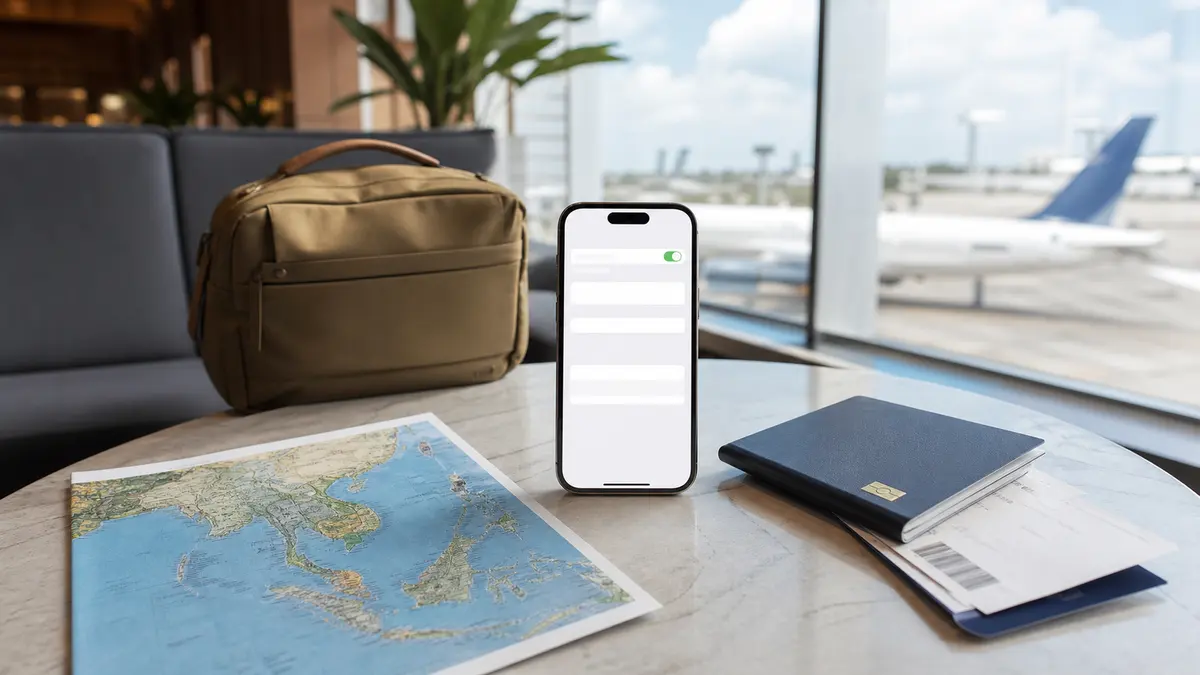
If you are trying to choose the best esim for southeast asia travel, do not start with the cheapest headline price. Start with your route: Thailand and Vietnam is one problem, while Thailand, Cambodia, Laos, Vietnam, Singapore, and Bali is a different one.
Regional eSIMs are good when they remove friction at borders. They are less good when the country list is fuzzy, hotspot is restricted, or a 30-day plan quietly expires halfway through a long backpacking loop.
| What you see | Likely cause | First move |
|---|---|---|
| A cheap Asia plan with vague coverage | The plan may skip smaller stops or islands | Check every country on your route before buying |
| Unlimited data that slows down | Fair-use limits or network management | Read the speed policy before choosing it for work |
| No signal after landing | Data roaming is off, the wrong line is selected, or activation has not started | Turn on roaming for the eSIM and set it as cellular data |
| Hotspot will not connect | The plan or phone settings may restrict tethering | Confirm hotspot support and test before a travel day |
| The eSIM asks for installation Wi-Fi | Most eSIM profiles need internet during install | Install at home or on airport Wi-Fi before departure |
Best eSIM for Southeast Asia Travel: The Short Answer
Choose a regional plan if you are crossing borders more than once. For a classic two-to-four-week route through Thailand, Vietnam, Malaysia, Singapore, Indonesia, and the Philippines, a regional Asia or Asia-Pacific eSIM is usually simpler than buying a local SIM in each country.
Airalo, Nomad, and Saily are the providers I would compare first for this route. Airalo is a familiar baseline for regional travel eSIMs, Nomad is strong when you want clear APAC-style setup and hotspot support, and Saily is worth checking for longer Asia and Oceania plans, especially when you want bigger data buckets.
Match the Plan to Your Route, Not the Region Name
Southeast Asia is not one tidy mobile zone. Thailand, Vietnam, Malaysia, Singapore, Indonesia, and the Philippines are common inclusions, but Cambodia, Laos, Brunei, Myanmar, and island-heavy routes can be where plans diverge.
For Thailand plus Vietnam only, compare regional plans against country-specific Thailand and Vietnam eSIMs. A country-specific pair can be cheaper and may offer better local network terms if you are spending most of your time in two places.
For Bangkok, Siem Reap, Hanoi, Singapore, and Bali, a single regional plan is often worth paying a little more for. You avoid reinstallation, payment issues abroad, and the annoying moment when your ride-hailing app needs data before you have a local SIM.
Already planning a Thailand-heavy trip? Keep our Thailand eSIM guide open while comparing regional plans, because Thailand-only pricing can beat Asia-wide bundles.
Provider Shortlist: Airalo, Nomad, Saily, or Country Plans?
Airalo is a sensible first check if you want a known regional marketplace and a familiar app flow. Its Asia regional offer is usually the baseline many travelers compare against before looking at newer competitors.
Nomad is appealing when your route stretches beyond Southeast Asia into places such as Japan, South Korea, Taiwan, Hong Kong, or China. Its APAC page says plans can support 4G/5G, add-ons, and hotspot or tethering, though you still need to verify the exact plan before checkout.
Saily is a strong comparison point for bigger regional data. Its official Asia and Oceania page lists plans from 1 GB to 25 GB plus unlimited options, coverage across 22 countries, data-only service, and hotspot sharing support.
Country-specific eSIMs still matter. If you are spending 10 days in Vietnam, 3 days in Singapore, and 2 days in Malaysia, the longest stop should drive the decision. Honestly, many “best Asia eSIM” lists skip that math.
How Much Data Should You Buy?
Buy for the days when you are lost, moving, or tired. Maps, translation, Grab, WhatsApp, hotel check-in messages, train tickets, and restaurant searches can eat more data than casual browsing.
For light use, 3 to 5 GB per week is a reasonable starting point. For remote work, hotspot, cloud photo backup, TikTok, YouTube, or long bus rides with streaming, look at 10 GB, 20 GB, or an unlimited-style plan with a clear fair-use policy.
Need a wider planning baseline? Our digital nomad eSIM guide covers backup data and hotspot habits, while our eSIM vs roaming cost breakdown helps compare a travel eSIM with your carrier's daily pass.
Setup Checks Before You Fly
Install the eSIM before departure on stable Wi-Fi. Do not wait until a hotel lobby in a new country, especially if your primary SIM starts charging roaming fees the second you turn data on.
On iPhone, Apple says an iPhone XS, XR, or later can use eSIM, and your phone must be unlocked if you want to use two different carriers. Apple also notes that iPhone can use one cellular data network at a time, so you need to choose the travel eSIM as the data line.
If setup feels confusing, use our iPhone travel eSIM setup walkthrough before deleting anything. Deleting an installed travel eSIM can make recovery harder with some providers.
Cross-border trips are also where line labels help. Name your home SIM “Primary” and your travel eSIM “SEA Data,” then check that data roaming is enabled only on the travel eSIM when the provider requires it.
Running into setup errors? Read our eSIM activation fixes, the Wi-Fi setup explainer, and the travel-safe eSIM transfer guide before you leave for the airport.
Hotspot, Calls, and the Data-Only Tradeoff
Most travel eSIMs are data-only. That means WhatsApp, FaceTime, Messenger, Google Voice, and other internet calling apps work, but you usually do not get a local phone number for regular SMS or cellular calls.
That is fine for many travelers. It gets less fine when a hotel, food delivery app, bank, or tour operator wants local SMS verification. If that matters, read our data-only eSIM versus phone number guide before buying.
Hotspot needs deserve their own check. Nomad's APAC page says tethering is supported, and Saily's Asia and Oceania page says hotspot sharing is supported, but plan-level terms can still matter. Test hotspot before a train day or work call.
For iPhone-specific tethering issues, keep our iPhone eSIM hotspot troubleshooting guide handy.
When Roaming or a Local SIM Is the Better Choice
Use carrier roaming if you need your home number for banking codes, business calls, or family emergencies and your carrier offers a fair travel bundle. It costs more, but it can be worth it for a short work trip.
Buy a local SIM if you stay in one country for several weeks, need a local number, or want the biggest data bucket at the lowest price. Thailand and Vietnam, for example, often have strong local tourist SIM options at airports and official carrier shops.
Choose a regional eSIM when convenience matters most. Border-heavy itineraries, late arrivals, overnight buses, island hops, and quick layovers are where one preinstalled plan feels less fragile.
Regional Planning Guides to Compare Next
If your route changes after buying flights, compare the same logic with other destinations. Our Bali eSIM guide is useful for Indonesia-heavy trips, while the UK eSIM guide, Spain eSIM guide, France eSIM guide, and Italy eSIM guide show how route shape changes the answer.
For non-Asia trips, see Morocco eSIM planning, Iceland eSIM planning, and cruise eSIM planning. Provider comparisons such as Nomad vs Airalo, Holafly vs Airalo, and cheapest Europe eSIMs also help spot pricing patterns before you buy.
Quick Checklist
- List every country and layover where you need mobile data.
- Check whether Cambodia, Laos, Indonesia, and the Philippines are included if they are on your route.
- Compare regional plans with country-specific plans for your longest stay.
- Confirm hotspot support, expiry rules, activation timing, and top-up options.
- Install the eSIM on Wi-Fi before departure, but activate it only when the provider instructs.
- Set the travel eSIM as your cellular data line and keep roaming off on your home SIM.
- Save provider support instructions offline before your first flight.
Official sources: Saily Asia and Oceania eSIM page · Apple's Dual SIM with eSIM support page. Check current provider pages before buying.
Pick the eSIM that matches your route, not the provider with the loudest “Asia” label. For most Southeast Asia travelers, the right answer is a regional plan with a verified country list, enough data for travel days, hotspot terms you understand, and setup completed before the first boarding call.
Frequently Asked Questions
what is the best esim for a southeast asia trip
For most multi-country trips, start by comparing a regional Asia or Asia-Pacific plan from Airalo, Nomad, or Saily against any country-specific plans for your longest stops. The best choice depends on your exact route, hotspot use, trip length, and whether Cambodia or Laos is included.
is a southeast asia esim better than local sim cards
A regional eSIM is usually easier if you cross borders every few days. Local SIM cards can still be cheaper for a long stay in one country, but they add airport queues, passport registration, and SIM swapping.
does a southeast asia esim include thailand vietnam and bali
Many regional plans include Thailand, Vietnam, Malaysia, Singapore, Indonesia, and the Philippines, but country lists are not identical. Bali uses Indonesian mobile networks, so confirm Indonesia is included before you buy.
how much data do i need for southeast asia travel
Light travelers can often manage with 3 to 5 GB per week. Add more if you use hotspot, upload video, stream, work remotely, or rely on maps and rideshare apps all day.
should i install my travel esim before flying
Yes. Install it on reliable Wi-Fi before departure, then leave the travel line off until the provider says it is safe to activate. That gives you time to fix setup problems before you land.